

Thinking about the clinic, or already booked in? This guide covers everything the booking page doesn’t need to: how the three days run, who the clinic suits, what to bring, and how to make a proper trip of it while you’re here. For current dates, prices and bookings, head back to the Camps & Clinics page.
What the clinic is
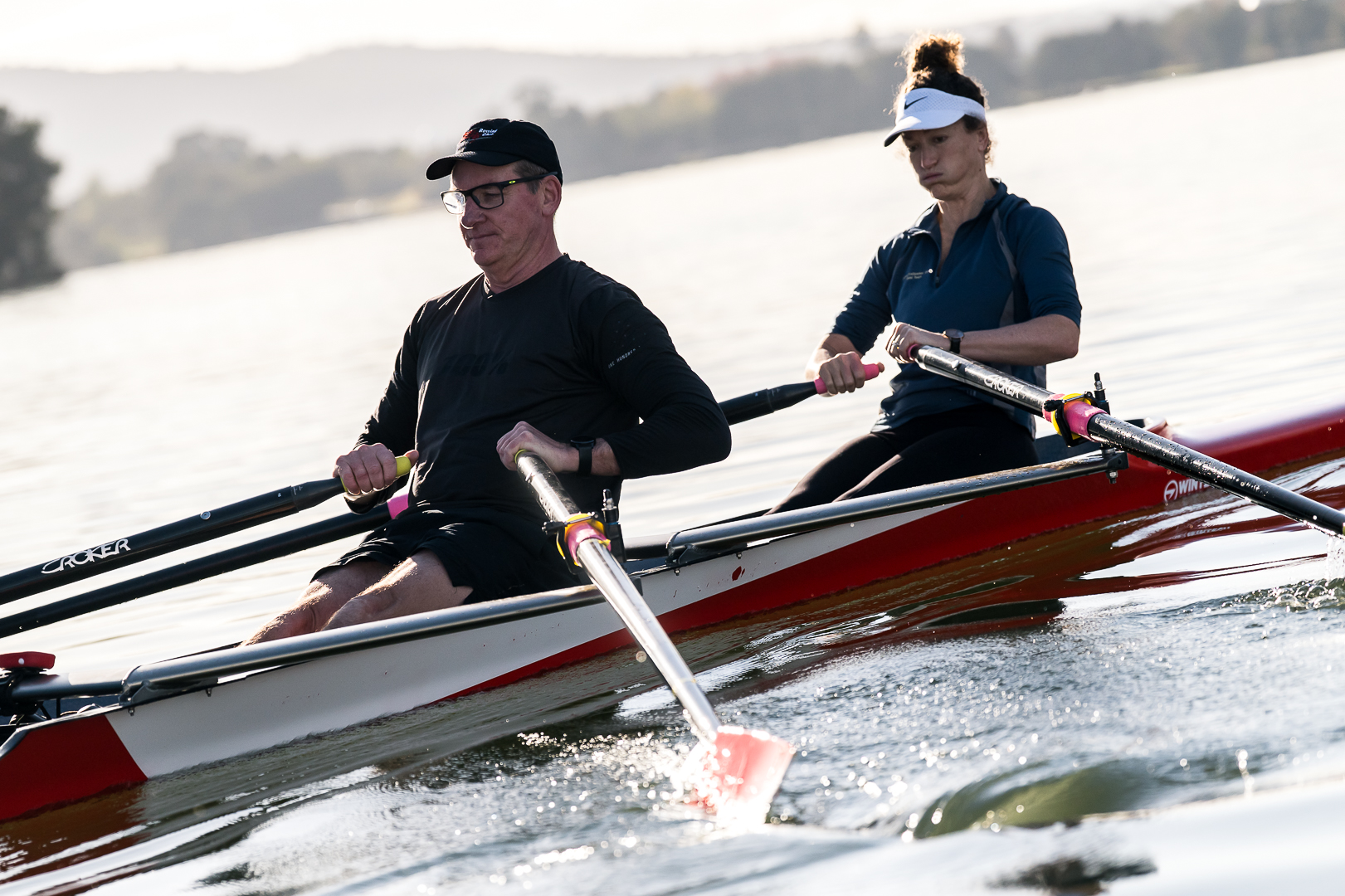
Three days of coaching built around one thing: making your boat go faster. You’ll be filmed, watched closely, given specific feedback and then sent straight back out to apply it, over and over, until the change starts to hold.
It’s a fixed-length program with a single fee, so it isn’t a membership and there are no ongoing payments. Coaching runs across the mornings, which leaves your afternoons free for recovery or for Canberra.
Coaching runs in small groups and numbers are deliberately capped, so nobody spends three days at the back of a group hoping to be noticed.
Who it’s for
The clinic suits rowers with more than twelve months on the water who have raced, or intend to. That’s the honest entry point, and it isn’t about being fast. It’s about having enough technical vocabulary to use the feedback you’ll be given.
Come solo or bring your crew. Solo rowers are matched into small boats by ability, so you’ll row with people at a similar level rather than being carried or doing the carrying. Crews who arrive together can keep their combination and work on it as a unit.
Most people who do the clinic are masters rowers, and our coaches spend a lot of their week with masters athletes. If you’re returning to rowing after a long break, or you’ve rowed for years but never had proper technical feedback, get in touch before booking and we’ll give you a straight answer about whether it’s the right fit.
Bringing someone who doesn’t row
Plenty of people come with a partner or friend who has never touched an oar. Rather than have them wait around, we run a tailored Learn to Row alongside the clinic, so they spend the mornings on the water too and you’re both free in the afternoons. Mention it when you book so we can plan for it.
What you’ll work on
Technique under the camera
On-water video capture, then structured review with a coach who tells you what’s actually happening rather than what you think is happening.
Small boat sessions
Most of the water time is in small boats, where technique has nowhere to hide and improvement transfers quickly.
Boat setup and rigging
How your rigging affects your stroke, and what to change when you get home.
Mobility and strength
An assessment of how your body moves, and what’s limiting your length or your finish.
Training that lasts
Honest conversations with coaches about training load, recovery and how to keep improving through your forties, fifties, sixties and beyond.
A plan you leave with
You go home with specific things to work on, not a warm feeling.
How the three days run
Day one, assessment. A yoga-based warm-up to start, then technical small boat rowing with video capture on the water. A mobility and strength assessment follows, then lunch with your coaches while you watch the footage back together. The point of day one is to find out what we’re working with.
Day two, application. Warm-up, then straight into targeted drills built from what day one showed. Coaches check progress through the session, and lunch is the coaches’ Q&A: training, rigging, recovery, ageing, whatever you want to ask. The sauna and the float beds are there afterwards if you want them.
Day three, integration. The big boat row. A guided row on Lake Burley Griffin taking in the parliamentary landmarks, in a crew that includes experienced Red Shed rowers so the boat is balanced and moving well. Weather permitting, you’ll pull in at the National Gallery for a look. Then a celebratory lunch to finish, and time with your coach on where you take it from here.
Where you’ll be rowing
Lake Burley Griffin is one of Australia’s best known stretches of water and home to the National Training Centre for Australia’s Olympic rowing team. It’s flat, protected, and it has a laned race course, which is why so much of the country’s high performance rowing happens on it.
Red Shed sits on Black Mountain Peninsula in Acton, reached via John Cardiff Close, with parking on site. Rowing lives on the bottom floor: go up the ramp and take the internal stairs down, or come straight down the external stairs when you arrive.
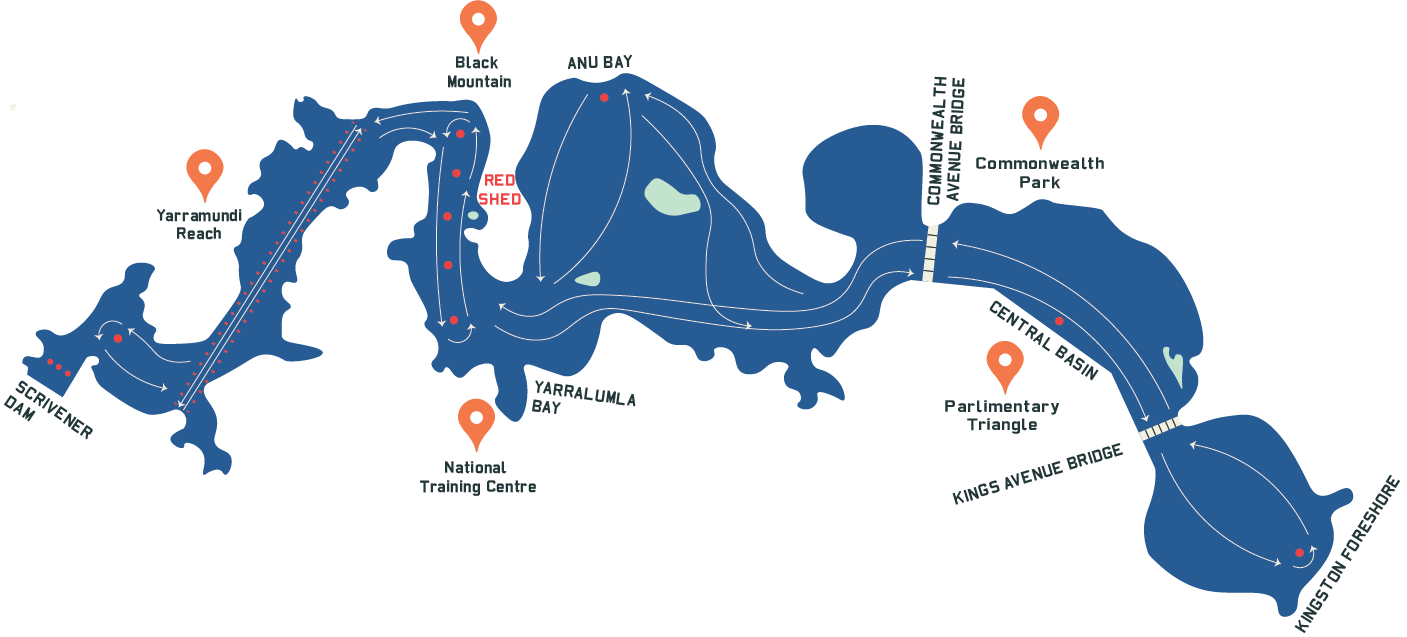
That’s the lake, and on day three you row a good part of it.
The boats
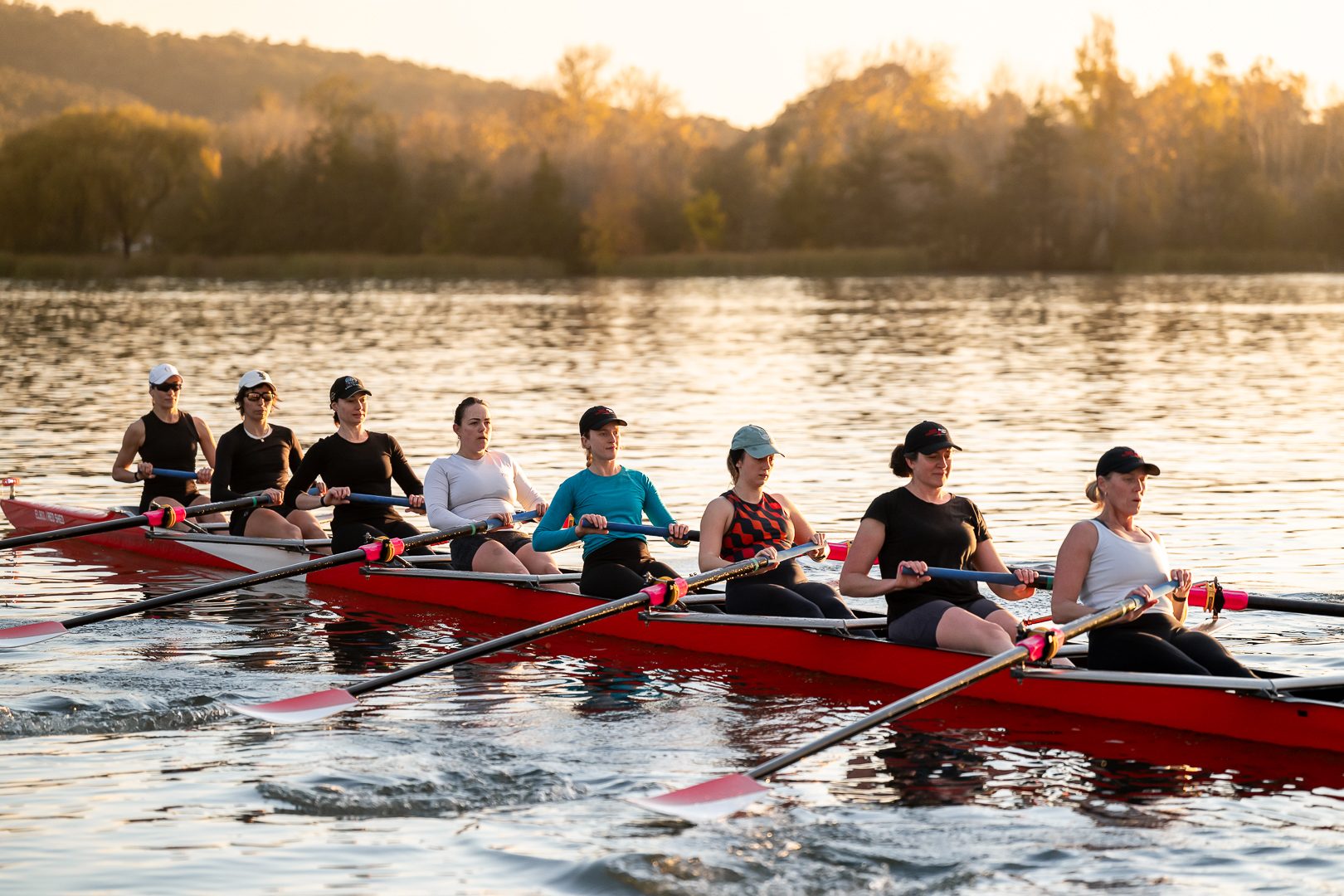
Our racing fleet is new and race weight: singles, doubles, pairs, quads and fours. Coastal boats are available as well, so you don’t need to bring anything.
If you’d rather row your own boat, you’re welcome to, but email us well before you travel so we can check we’ve got room for it. Racking is limited and we’d hate for you to tow a boat down and find nowhere to put it.
Your coaches
The clinic is coached by Red Shed’s rowing team. Between them they’ve coached Olympic and world championship medallists, led Australia’s women’s rowing program, developed state champions and coached masters rowers to medals at international competition. Just as importantly, they work with masters rowers through the year rather than fitting them around a school season. You can meet our rowing coaches here.
Your first morning
Arrive about fifteen minutes early so you can find us, meet your coaches and the other rowers, and get sorted before the warm-up starts. Every session is coached.
Easy Oar, our cafe, is right there for coffee before and after, and it’s where most people end up between sessions.
What to wear and bring
Wear fitted, comfortable activewear you can move freely in, and avoid anything loose that can catch in the boat’s moving parts. Socks are essential, as shoes come off in the boats, and slip-on shoes make getting in and out easy. Bring runners as well for land-based sessions, plus something you can do yoga and mobility work in.
Bring a water bottle, sunscreen and a hat, and a warm layer in the cooler months, since it’s always a few degrees cooler on the water. Canberra mornings are genuinely cold from May through September, colder than most visitors expect, so pack more warmth than you think you need. If you use your own kit for rigging or measurement, bring it.
There are bathrooms on site with showers and hairdryers, so you can change after your session and go straight into your day. Bring bathers and a towel if you plan to use the sauna or the plunge.
Your afternoons
Coaching finishes after lunch, which is deliberate. Three consecutive mornings of hard technical work is enough load, and the afternoons are where the work settles.
Our recovery hub is included in your clinic fee, so the sauna and the zero gravity float beds are yours to use across the three days. The float bed is a heated bed suspended over warm water, so you get the weightless part without getting wet. It’s all optional. Some people use it every afternoon, some never go near it.
If you’d rather see the city, you’re eight minutes from the centre of Canberra and walking distance from the National Museum. The National Gallery, Parliament House, the War Memorial and the Portrait Gallery are all within a short drive, and the Canberra District wineries are half an hour out. Ask us for suggestions when you’re here. We’re happy to point you at the good ones.
Frequently asked questions
Do I need to be a fast rower?
No. The clinic is about improvement, not speed. What matters is that you’ve been rowing long enough to make use of technical feedback, which is roughly the twelve month mark, and that you’ve raced or plan to.
Can I come on my own?
Yes, and plenty do. Small boat sessions are matched by ability, so you’ll be rowing with people at your level, and the group tends to become a group fairly quickly.
Can my crew come together?
Yes. Bring your combination and we’ll coach it as a crew.
What if the weather turns?
Canberra mornings can be foggy and Lake Burley Griffin can get windy. If conditions aren’t safe, the session moves to land: erg work, video review, rigging, mobility. The clinic runs regardless, and the content still lands.
Am I too old for this?
No. Masters rowing is one of the strongest parts of the sport and our coaches work with masters rowers every week, including plenty in their sixties and seventies. Ageing changes what you should train, not whether you should.
Where should I stay?
We recommend Vibe Hotel Canberra and East Hotel, both of our accommodation partners and both an easy drive from the shed. Get in touch before you book and we’ll let you know if there’s a rate going for clinic rowers.
What if I need to cancel?
Get in touch as early as you can. Cancellations and credits are handled under our terms and conditions, and all requests need to be in writing to info@redshed.org.au.
Is there parking?
Yes, on site and free.
Do I need a membership?
No. The clinic is a program with a single fee, booked on its own.
What do I actually leave with?
Video of your rowing, a clear picture of what’s holding your boat speed back, changes to make to your rigging and your training, and a plan for what to work on next.
After the clinic
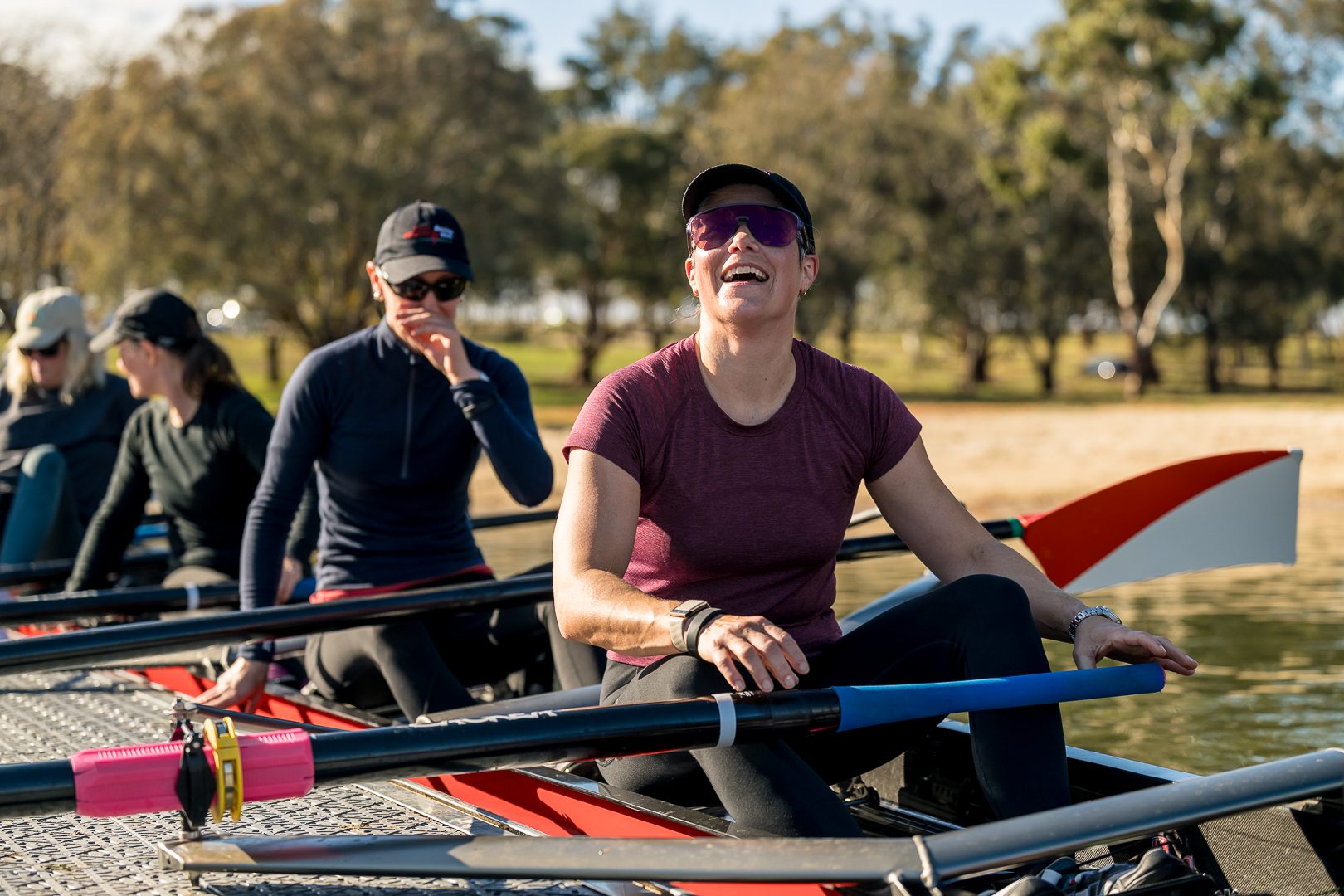
The clinic is three days, but the point is what happens in the months afterwards. Your coach will finish by talking through where you’re at and what to prioritise.
If you’re local, that might mean a Red Shedder Membership* so you can keep training here, or one-on-one private coaching to keep working on the same things. If you’re visiting, it’s the plan you take home to your own club and your own coach, and plenty of people come back for the next one to see how far it’s moved.
Questions? Email us at rowing@redshed.org.au. If you’re not sure the clinic is the right fit, tell us about your rowing and we’ll give you an honest answer.