

Thinking about learning to row, or already booked in? This guide covers everything the booking page doesn’t need to: how the program works, what you’ll learn, what to bring and where rowing can take you. For current dates, times and bookings, head to adult Learn to Row or youth Learn to Row.
How the program works
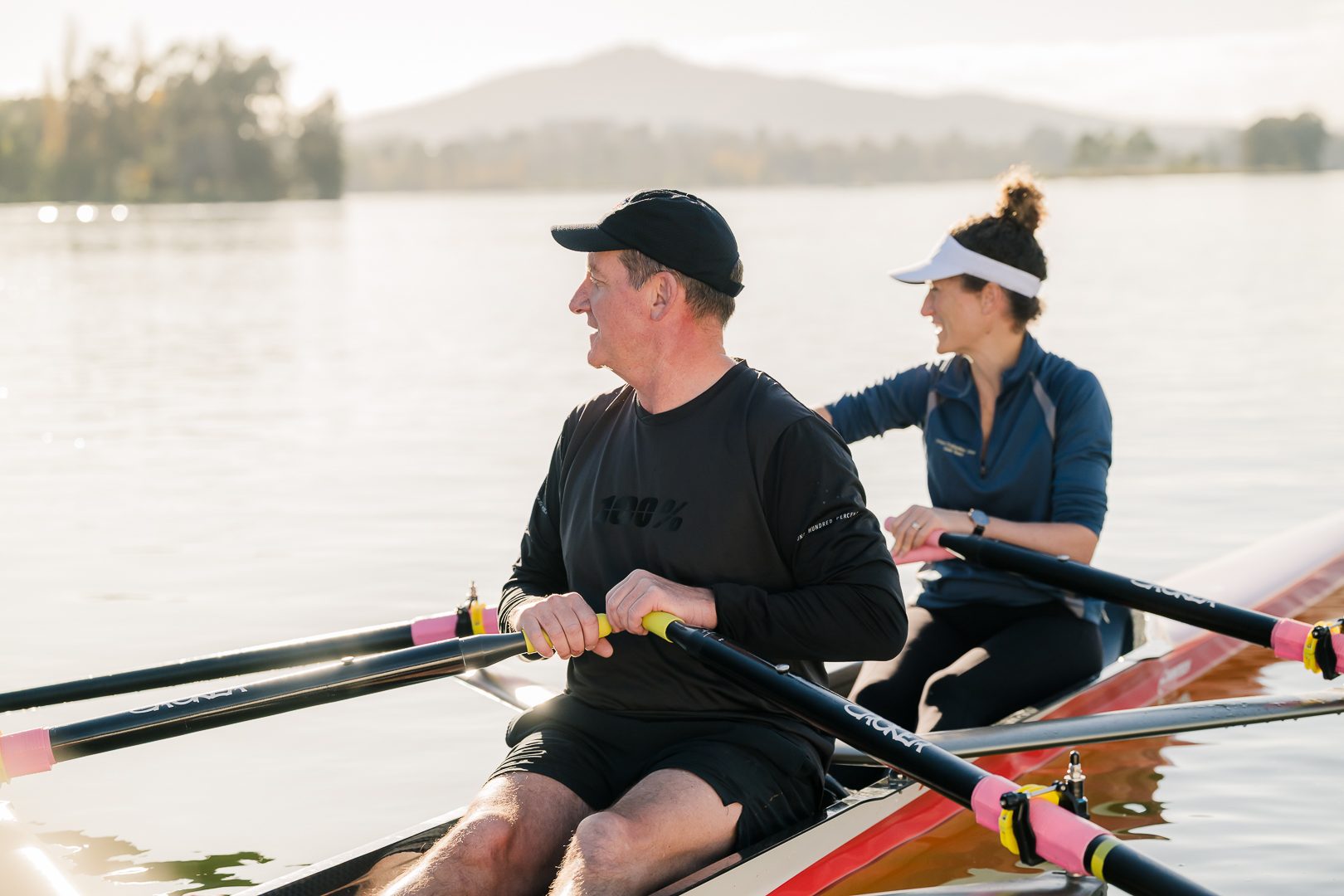
Learn to Row is where rowing starts at Red Shed. It runs as a fixed-length program with a single fee, so it’s not a membership and there are no ongoing payments. Programs come in different shapes: most run once a week across a term, while intensives and holiday programs condense the same coaching into a shorter block, and session lengths vary with them. Every listing shows its own days, times, length and price, so the booking page always has the current detail.
We run Learn to Row for different groups through the year:
- Adults (18+), weekend morning sessions across the term, and an early-morning intensive that covers the same ground in half the time
- Youth (Years 7 to 12), term programs and short intensives timed to get ahead of the school rowing season
- School holiday programs, a full week on the water for years 7 to 12, from first-timers through to elite youth rowers
- University students, a semester program at a student rate, open to students from any university
Whichever you choose, everything is provided: boats, oars, safety gear and coaching. You bring yourself and a water bottle. Places in every program are capped so coaches can give real attention to every rower.
What you’ll learn
The program takes you from never having held an oar to rowing confidently as part of a crew.
The fundamentals
Rowing technique, terminology, body positioning and the stroke, built up step by step so nothing is assumed.
On-water sessions
The heart of the program. Coached rowing on Lake Burley Griffin, starting in stable boats and progressing as your skills do.
Off-water training
Time on the rowing machine (the erg) to groove your technique, plus the basics of rowing fitness.
Boat handling and safety
How to carry, launch and land a boat, look after equipment and stay safe on the water.
Sculling first
Beginners learn to scull, rowing with two oars, which builds the best foundation. Sweep rowing (one oar) is an option to explore later.
Rowing with others
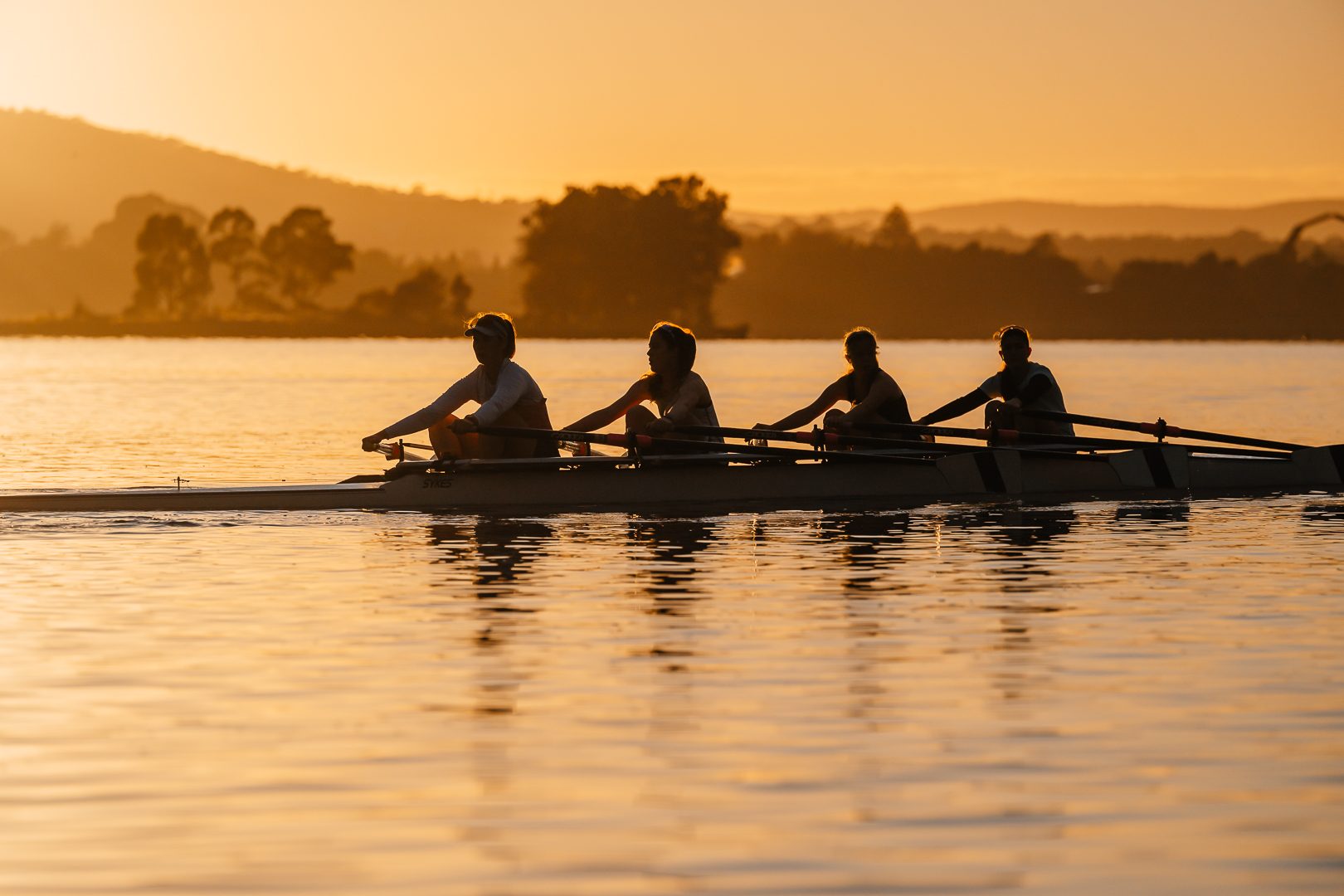
Rowing is a team sport at heart. We aim to keep you with a familiar group each week, and most people finish with new friends as well as a new skill.
Your first session
Arrive about 15 minutes early so you can find us, meet your coach and get sorted before the session starts. Rowing lives on the bottom floor of Red Shed: go up the ramp and take the internal stairs down, or come straight down the external stairs when you arrive. Your first session covers the essentials on land, an introduction to the boats and equipment, a safety briefing and your first strokes on the erg, before you get on the water. Every session is coached.
Red Shed is on Black Mountain Peninsula, Acton, reached via John Cardiff Close. There’s parking on site, and Easy Oar, our cafe, is right there for a coffee after your session.
What to wear and bring
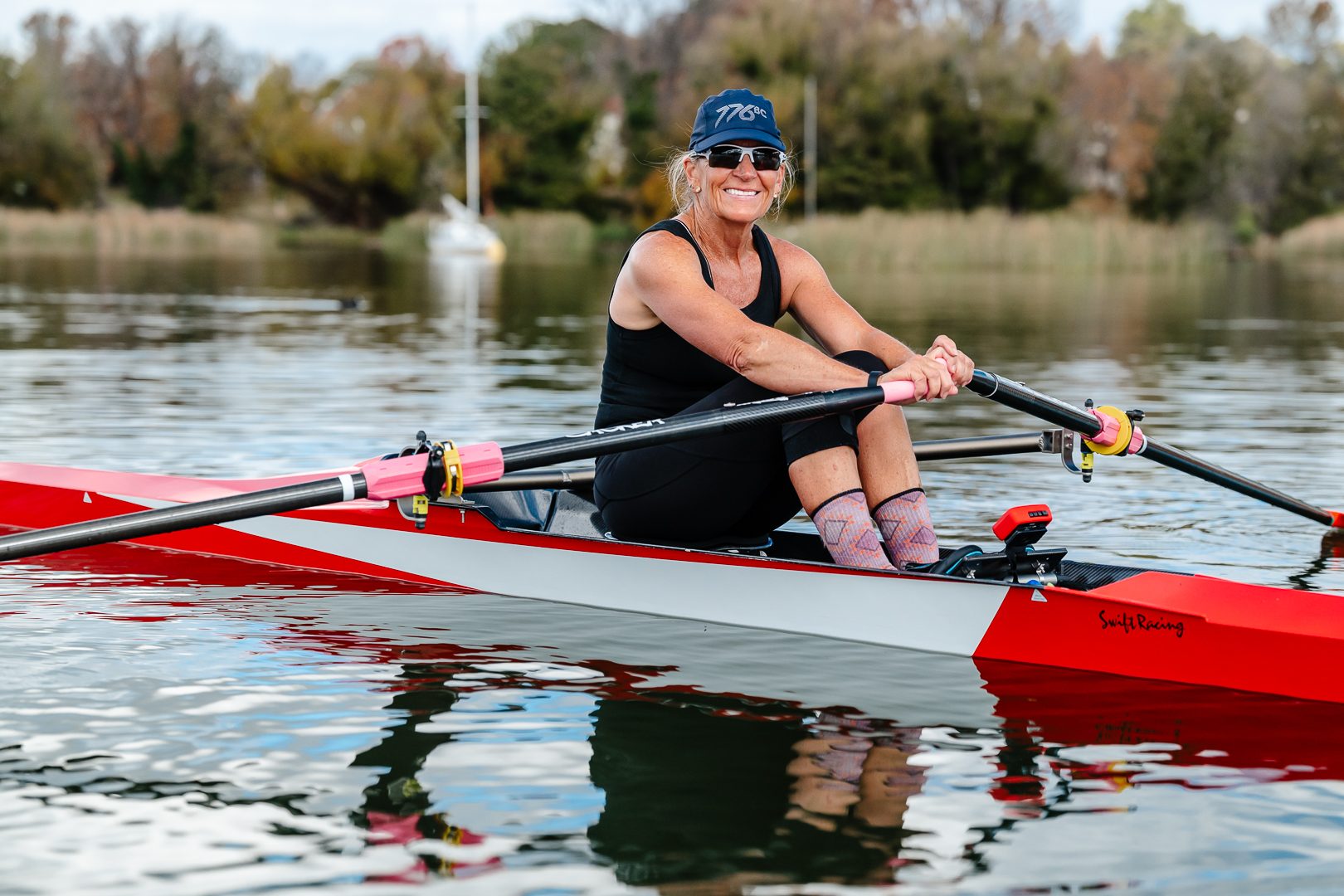
Wear fitted, comfortable activewear that you can move freely in. Avoid loose shorts or baggy tops, which can catch in the boat’s moving parts. Socks are essential, as shoes come off in the boats, and slip-on shoes make getting in and out easy. Pack runners too, for land-based training when the weather keeps us off the water. Bring a water bottle, sunscreen and a hat for morning light, and a warm layer in the cooler months, since it’s always a few degrees cooler on the water. Leave jewellery and anything you’d hate to drop in the lake at home.
There are bathrooms on site with showers and hairdryers, so you can change after your session and head straight to work, or wherever the day takes you.
Fitness and swimming
You don’t need to be fit to start. Rowing meets you where you are, and the program builds fitness gradually. You do need to be comfortable in the water: being able to swim 50 metres and tread water is the standard we ask of every rower. If that’s a concern, get in touch before booking and we’ll talk it through.
Weather
Rowing happens in the rain, and some of the best sessions are the still, drizzly ones. If conditions aren’t safe for beginners (strong wind, fog or storms), your coach will run the session on land instead, working on technique, erg skills and boat craft, so the session still counts and you still learn. That’s where the runners come in. Outright cancellations are very rare, and if one happens you’ll be told by text.
Frequently asked questions
Do I need any experience?
No. Learn to Row assumes nothing. Every skill is taught from the beginning.
Which program should I pick?
It mostly comes down to your availability. If your weekends are free, the weekly program gives your body more time to absorb each session. If weekends are hard or you’d rather get there faster, the intensive covers the same content in a shorter block. Youth rowers aiming for the school season should look at the intensive or a school holiday program, which get you ready before term starts.
I rowed years ago. Do I start again with Learn to Row?
That depends on your comfort. You’re very welcome to start fresh with Learn to Row, and plenty of returning rowers do. If you’d rather not, email our team at info@redshed.org.au and they’ll find the right place to slot you in.
What if I miss a session?
Life happens. Talk to your coach, who will help you catch up within your program where possible. Your enrolment covers the sessions listed for your program, and there are no separate make-up sessions.
Can I join after the program has started?
Yes, programs stay open for enrolment after week one at the full program fee. Whether that’s right for you depends on how far in the program is, so contact us and we’ll give you an honest answer.
Am I too old to learn?
No. Rowing is one of the few sports people genuinely pick up at any age, and our adult programs regularly include rowers in their 50s, 60s and beyond. Masters rowing is one of the strongest parts of the sport.
Is there a weight limit?
There’s no set weight limit. Boats come in different shapes and sizes, and coaches match every rower to one that suits them. The more useful question is mobility: you’ll need to manage the step down into the boat and back out again, with a steadying hand from us where it helps. If you’re wondering whether rowing will work for your body, get in touch for an honest chat. Rowing is about as low-impact as sport gets, and people row well into their 80s, so the answer is usually yes.
My child has just finished Year 6. Can they join a youth program?
Yes. Youth programs are for Years 7 to 12, and Year 7 counts from the moment Year 6 is finished. Students qualify from the school holidays straight after Year 6, so the holiday program before Year 7 starts is a popular first taste of rowing.
Can parents come out on the water with youth rowers?
For safety reasons, only rowers and coaches go out in the boats and the coach’s tinny, so we ask parents to wait on shore. It’s a good wait, though: Easy Oar is right there for a coffee, a matcha or a bite to eat while your rower trains.
Where rowing takes you next
Learn to Row is the start, not the whole story. When your program finishes, you’ll have options:
- Keep rowing at Red Shed. A Red Shedder Membership* gives you a weekly allowance of sessions across rowing, the gym and recovery, so the habit you’ve built keeps going.
- Development and squads. Graduates step into development sessions to build experience and confidence, and from there into squads for rowers who want to train and race.
- Club rowing down the track. Black Mountain Rowing Club is Red Shed’s home club, and where most rowers go when they want to race. It’s for experienced rowers, so it isn’t the step straight after Learn to Row, but keep building through development and it’s a natural place to end up. There are other clubs in Canberra as well, so ask your coach what would suit you.
Not sure what’s next for you? Ask your coach in the final week. They’ll know where you’re at and what you’d enjoy.
Questions? Email us at info@redshed.org.au. We’re happy to help you pick the right program.